Quick Summary:
- Common Types of Home Insulation: Fiberglass, cellulose, spray foam, and rigid foam board offer different benefits depending on where you install them.
- Wisconsin R-Values: ENERGY STAR recommends R-60 for previously uninsulated attics in Wisconsin’s climate zones, with R-49 recommended when 3–4 inches of insulation already exist.
- Choosing the Right Material: Consider your home’s existing insulation, moisture conditions, and available space before deciding which option makes sense.
Your furnace is running, but the upstairs bedrooms still feel chilly. Sound familiar? Wisconsin winters can expose insulation problems, leaving you with cold rooms and higher heating bills. Choosing the right insulation types can help turn things around.
At Larson & Keeney Home Services, we’ve helped Wisconsin homeowners solve insulation problems since 2009. From older Milwaukee homes to newer construction, we know every type of property requires a unique solution. This guide breaks down different insulation materials, their R-values, and how to choose the right fit for your home.
Types of Home Insulation for Wisconsin Homes
Insulation materials differ in R-value, moisture resistance, and installation methods. R-value measures how well insulation resists heat flow; higher numbers provide greater insulating performance.
Here’s how the four most common types compare:
1. Fiberglass Insulation
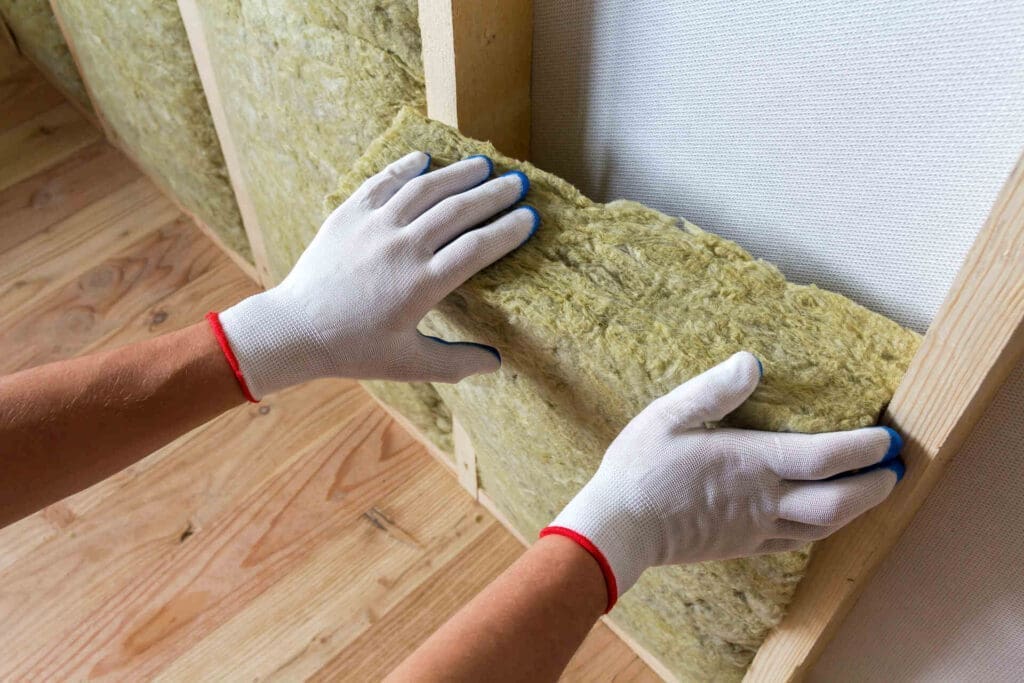
Fiberglass comes in pre-cut batts for walls and floor joists, or loose-fill material for irregular attic spaces. It’s an affordable, widely available option, but gaps from poor installation can reduce its effectiveness. You’ll also need proper air sealing to control drafts.
2. Cellulose Insulation
Made from recycled paper fibers treated for fire resistance, cellulose comes in loose-fill and dense-pack forms. It works well around attic obstructions and inside existing wall cavities.
When comparing cellulose vs. fiberglass insulation, consider how each handles moisture and fills irregular spaces. Because cellulose absorbs moisture, we recommend addressing any leaks or dampness before installation.
3. Spray Foam Insulation
Spray foam insulation expands to fill gaps as it’s applied, helping keep warm air inside your home. There are two main types:
- Open-Cell Spray Foam: A more affordable option that allows moisture vapor to pass through, though it has a lower R-value per inch.
- Closed-Cell Spray Foam: Offers a higher R-value per inch and better moisture resistance, making it useful in tight spaces.
4. Rigid Foam Board Insulation
Rigid foam board comes in three main types: expanded polystyrene (EPS), extruded polystyrene (XPS), and polyisocyanurate (polyiso). All three vary in insulating performance and moisture resistance, so the best choice depends on where you are installing, such as a basement wall or beneath concrete slabs. Some foam board installations also need a protective covering, such as drywall, to meet local fire safety codes.
Insulation R-Value Comparison for Wisconsin Homes
| Insulation Type | Approximate R-Value per Inch* | Typical Applications |
|---|---|---|
| Fiberglass Batts | R-2.9–R-3.8 | Walls, floors, attics |
| Blown-In Fiberglass | R-2.2–R-2.7 | Attics, enclosed cavities |
| Cellulose | R-3.2–R-3.8 | Attics, existing walls |
| Open-Cell Spray Foam | R-3.5–R-3.7 | Interior walls, roof assemblies |
| Closed-Cell Spray Foam | R-5.8–R-6.9 | Rim joists, limited-depth cavities |
| Rigid Foam Board | R-3.8–R-6.5 | Basement walls, slabs, exterior sheathing |
*R-values vary by product, temperature, and installation conditions.
For Wisconsin attics, ENERGY STAR recommends R-60 if there’s no existing insulation, or R-49 if you already have 3–4 inches. These levels often exceed minimum building code requirements. If your attic has 6-inch joists, you’ll typically need insulation above the framing to reach R-49 and reduce heat loss through the joists.
Which Insulation Type Is Best for Wisconsin’s Climate?
Attic Insulation
In Wisconsin homes with vented attics, we often recommend blown-in cellulose or fiberglass because they fill spaces around framing and help reach recommended R-values. Before adding attic insulation, we’ll check existing coverage, air leaks, and ventilation to make sure we’re addressing the right problems.
For homes with properly designed unvented roof assemblies, closed-cell spray foam along the roofline may be a better fit.
Wall Insulation
Standard 2×4 walls have roughly 3.5 inches of cavity space, limiting insulation thickness. In older Milwaukee and Waukesha homes, installers can often add dense-pack cellulose through small access holes without opening entire walls.
If your walls have limited space, closed-cell spray foam offers a higher R-value per inch, though installation generally needs greater access to the cavities.
Crawl Space and Rim Joist Insulation
Rim joists, where your floor framing meets the foundation, are common sources of drafts. We use closed-cell spray foam for rim joist insulation because it seals air leaks as it insulates.
In a conditioned crawl space, insulating the foundation walls helps keep the area within your home’s thermal envelope. For unconditioned spaces, insulation beneath the floor helps prevent cold floors in the rooms above. We’ll also check for moisture problems before recommending either approach.
Basement Walls
If your Wisconsin basement has moisture concerns, rigid foam board and closed-cell spray foam are often better picks than fiberglass or cellulose because they resist moisture more effectively. We’ll also need to consider your foundation’s condition and whether the basement is finished.
Depending on the application and local codes, foam insulation may require a protective covering, such as drywall.
Common Mistakes Wisconsin Homeowners Make When Choosing Insulation
- Choosing Based on Price Alone: A lower price per bag doesn’t always mean a cheaper project. Compare the installed cost of reaching your target R-value and which insulation improvements best address your home’s needs.
- Skipping Air Sealing: Gaps around pipes, wiring, and attic openings let warm air escape. Tackling air sealing before insulation helps reduce drafts and heat loss.
- Overlooking Existing Insulation: Older Wisconsin homes often have thin or uneven insulation. A home energy audit can help identify hidden heat loss before you decide where to add insulation.
- Ignoring Moisture Problems: Fix roof leaks and condensation before adding insulation. Otherwise, trapped moisture can lead to mold and wood damage.
- Confusing Air and Vapor Barriers: Air barriers limit drafts, while vapor retarders slow moisture movement through materials. Installing the wrong barrier in the wrong place can trap moisture inside walls.
The last thing you want is to invest in new insulation only to end up with the same cold rooms and high heating bills. At Larson & Keeney Home Services, we’ll look beyond insulation depth to identify where your home is losing heat and recommend improvements that address the problem.
Contact our team to schedule an insulation assessment. We’ll help you choose the right insulation types for your Wisconsin home so you can stay comfortable and energy-efficient year-round.
FAQ — Insulation Types for Wisconsin Homes
What R-Value Do I Need for a Wisconsin Attic?
For most Wisconsin attics, ENERGY STAR recommends R-49 to R-60, depending on existing insulation levels. If you’re unsure what’s already there, measuring the insulation depth and identifying the material can help determine how much more you need.
Is Cellulose or Fiberglass Better for a Wisconsin Attic?
Both work well when sealed and installed at the proper depth. Cellulose contains recycled paper fibers and settles around obstructions, while blown-in fiberglass offers similar coverage without absorbing moisture as readily.
Is Spray Foam Worth the Extra Cost in Wisconsin?
Spray foam is often worth considering if you have limited space or air leakage. Its higher upfront cost may be justified in specific areas, such as rim joists, but it isn’t necessary for every insulation project.
Can I Add Insulation Over Existing Attic Insulation?
Yes, you can, as long as the existing insulation is dry, undamaged, and free of pest contamination. Adding blown-in insulation over older batts is common, but you should always address air leaks and ventilation issues first.
Find the Right Insulation for Your Wisconsin Home
Not sure which type of insulation is best for your home? Our team can assess your existing insulation, identify air leaks, and recommend solutions to improve year-round comfort and energy efficiency.